Implementing SEL Programs: A 3-Month Action Plan for Schools
Anúncios
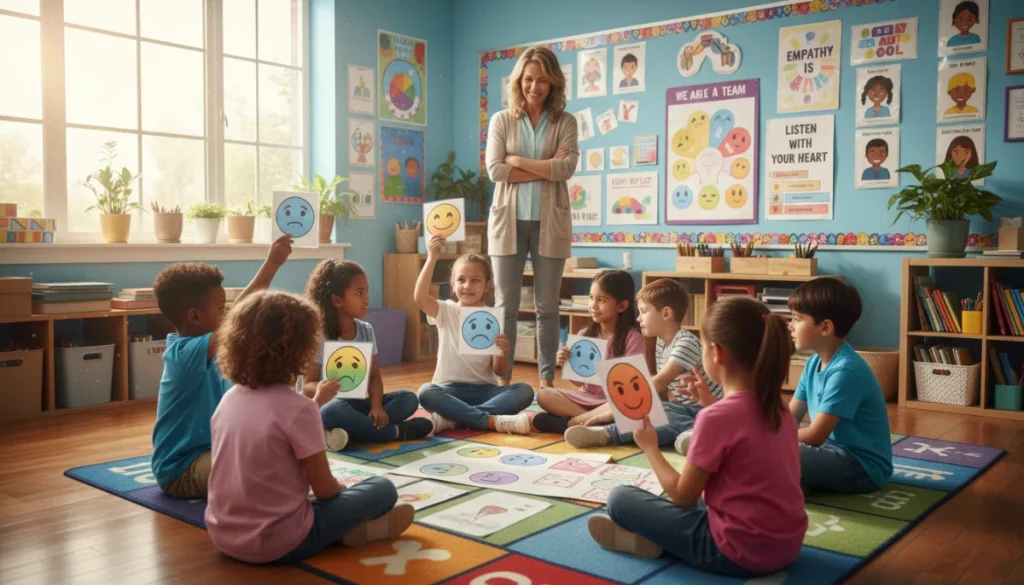
Implementing Social-Emotional Learning (SEL) Programs: A 3-Month Action Plan for U.S. Elementary Schools offers a structured approach for educators to integrate vital social and emotional competencies into the core curriculum, fostering a supportive and effective learning environment.
Anúncios
Embarking on the journey of implementing Social-Emotional Learning (SEL) programs: a 3-month action plan for U.S. elementary schools can seem daunting, yet its benefits for student development are profound. This guide provides a clear, actionable roadmap to integrate SEL effectively, ensuring a supportive and enriching educational experience for every child.
Understanding the Foundation of SEL
Social-Emotional Learning (SEL) is the process through which children and adults acquire and effectively apply the knowledge, attitudes, and skills necessary to understand and manage emotions, set and achieve positive goals, feel and show empathy for others, establish and maintain positive relationships, and make responsible decisions. It’s not just an add-on; it’s a fundamental aspect of holistic education that prepares students for success in school and life.
Anúncios
The core competencies of SEL—self-awareness, self-management, social awareness, relationship skills, and responsible decision-making—are interconnected and crucial for fostering a positive school climate. When students develop these skills, they are better equipped to navigate challenges, build healthy relationships, and contribute positively to their communities. A well-implemented SEL program creates a foundation for academic achievement by reducing behavioral issues and increasing engagement.
Defining SEL and its Core Competencies
At its heart, SEL teaches students how to understand themselves and interact effectively with the world around them. These competencies are not innate; they are learned and developed over time through intentional instruction and practice. Recognizing the importance of these skills early in a child’s development, elementary schools are ideally positioned to lay this groundwork.
- Self-awareness: Recognizing one’s emotions, thoughts, and values, and how they influence behavior.
- Self-management: Managing one’s emotions, thoughts, and behaviors effectively in different situations.
- Social awareness: Understanding the perspectives of others and empathizing with individuals from diverse backgrounds.
- Relationship skills: Establishing and maintaining healthy and rewarding relationships with diverse individuals and groups.
- Responsible decision-making: Making constructive choices about personal behavior and social interactions.
These competencies are not isolated; they are interwoven and reinforce each other. For example, improved self-awareness can lead to better self-management, which in turn can enhance relationship skills. The integrated nature of SEL makes it a powerful tool for comprehensive student development.
Why SEL is Crucial for Elementary Students
Elementary school is a critical period for social and emotional development. Children are learning to understand their place in the world, interact with peers, and cope with new challenges. SEL programs provide them with the tools to navigate these experiences successfully. Research consistently shows that SEL leads to improved academic performance, better classroom behavior, and reduced emotional distress among students.
Furthermore, SEL fosters a more inclusive and respectful school environment. When students learn empathy and responsible decision-making, instances of bullying and conflict tend to decrease. This creates a safer and more welcoming space where all students feel valued and can thrive. The long-term benefits extend beyond the classroom, preparing students to be engaged, empathetic citizens.
Month 1: Planning and Preparation Phase
The initial month of implementing an SEL program is crucial for laying a solid foundation. This phase involves thorough planning, securing stakeholder buy-in, and selecting the most suitable curriculum. Without careful preparation, even the best intentions can falter. A structured approach ensures that all necessary elements are considered and addressed before direct implementation begins.
Engaging the entire school community, from administrators to parents, is vital during this stage. Their understanding and support will be instrumental in the program’s success. This month is about building consensus and creating a shared vision for what SEL will achieve within the school. Clear communication and collaboration are key to fostering a sense of collective ownership.
Forming an SEL Steering Committee
The first step is to establish a dedicated SEL steering committee. This committee should comprise a diverse group of stakeholders, including school administrators, teachers from various grade levels, school counselors, support staff, and potentially parent representatives. Their collective expertise will be invaluable in guiding the implementation process.
- Identify key stakeholders: Ensure representation from all relevant groups within the school community.
- Define roles and responsibilities: Assign specific tasks to committee members to ensure accountability.
- Establish regular meeting schedules: Consistent communication is vital for progress and problem-solving.
The committee’s primary role is to champion the SEL initiative, oversee its development, and address any challenges that arise. Their commitment will set the tone for the entire school’s engagement with the program.
Assessing Current Needs and Resources
Before selecting a specific SEL curriculum, it’s essential to conduct a thorough needs assessment. This involves understanding the current social-emotional strengths and challenges of the student body and staff. Surveys, focus groups, and existing data (e.g., behavioral referrals, attendance rates) can provide valuable insights.
Simultaneously, an inventory of existing resources, both human and material, should be undertaken. This includes identifying staff members with SEL expertise, available training opportunities, and any current programs that could be integrated or leveraged. Understanding the school’s capacity will inform realistic goal setting.
Selecting an SEL Curriculum and Materials
With a clear understanding of needs and resources, the committee can then proceed to select an appropriate SEL curriculum. It’s important to choose a program that is evidence-based, culturally responsive, and aligned with the school’s values and goals. Consider programs that offer comprehensive teacher training and ongoing support.
Review various curricula, looking for those that provide age-appropriate activities, clear learning objectives, and assessment tools. Pilot programs or discussions with schools already using specific curricula can offer valuable perspectives. The chosen curriculum should be adaptable to the unique context of the elementary school.
Month 2: Professional Development and Pilot Implementation
With the planning complete and a curriculum selected, month two focuses on equipping staff with the necessary skills and beginning a controlled rollout. This phase is about building capacity within the teaching staff and gaining initial insights into how the program functions in a real classroom setting. Effective professional development is the cornerstone of successful SEL integration.
It is during this month that theoretical knowledge begins to translate into practical application. The pilot implementation allows for adjustments and refinements before a school-wide launch. Feedback from pilot teachers and students is invaluable for optimizing the program’s effectiveness.
Comprehensive Teacher Training
High-quality professional development is non-negotiable for successful SEL implementation. Teachers need to understand not only the ‘what’ of SEL but also the ‘why’ and ‘how.’ Training should cover the core competencies, specific curriculum components, and strategies for integrating SEL into daily instruction and classroom management.
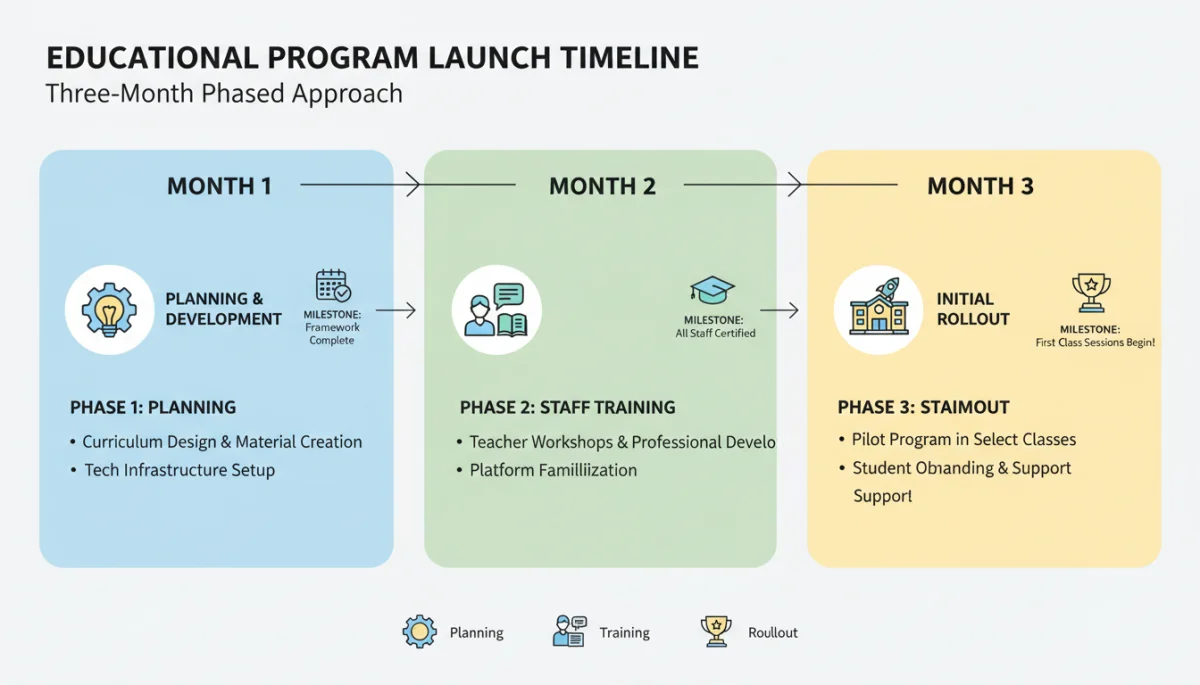

Training should be interactive, providing opportunities for practice and peer collaboration. Ongoing support, such as coaching and follow-up sessions, is just as important as initial training. Teachers should feel confident and supported in their role as SEL facilitators.
Establishing a Pilot Program
Rather than launching school-wide immediately, consider a pilot program in a few selected classrooms or grade levels. This allows the school to test the curriculum, identify potential challenges, and gather feedback in a controlled environment. The pilot classrooms should represent a cross-section of the school community.
- Select diverse pilot classrooms: Include teachers with varying levels of experience and student demographics.
- Provide intensive support to pilot teachers: Offer regular check-ins, coaching, and resources.
- Collect structured feedback: Use surveys, observation, and interviews to gather insights from teachers and students.
The pilot phase is an opportunity for learning and adaptation. It allows the steering committee to refine the implementation strategy based on real-world experiences before scaling up.
Integrating SEL into Daily Routines
SEL should not be viewed as a separate subject but rather as an integral part of the school day. During the pilot, teachers should explore ways to weave SEL concepts into existing lessons, morning meetings, transitions, and classroom management strategies. This integration makes SEL feel natural and reinforces its importance.
For example, a math lesson could include discussions on perseverance (self-management) when solving a difficult problem, or a literature class could focus on empathy (social awareness) when analyzing character motivations. The goal is to create a culture where social-emotional skills are consistently recognized and practiced.
Month 3: Full School-Wide Launch and Ongoing Support
The final month of the initial action plan focuses on extending the SEL program to the entire elementary school and establishing mechanisms for continuous improvement. This phase marks the transition from pilot to full implementation, requiring careful coordination and sustained effort. The objective is to embed SEL deeply within the school’s culture.
A successful school-wide launch depends on the momentum built during the previous months. Continued communication, celebration of successes, and proactive problem-solving are essential. This is not the end of the journey, but rather the beginning of a long-term commitment to student well-being.
School-Wide Rollout and Communication
With insights from the pilot program, the SEL committee can now prepare for a full school-wide launch. This involves disseminating updated curriculum materials, conducting final training sessions for all staff, and clearly communicating the program’s goals and expectations to the entire school community, including parents.
Hold an informational session for parents to explain the benefits of SEL and how they can support these skills at home. Clear and consistent messaging ensures that everyone understands their role in fostering a socially and emotionally intelligent environment. A unified approach is critical for impact.
Establishing Support Systems for Staff
Ongoing support for teachers is paramount. Implementing a new program, especially one as nuanced as SEL, can be challenging. Establish peer-to-peer mentoring systems, regular professional learning communities (PLCs), and accessible resources. Provide dedicated time for teachers to collaborate, share best practices, and troubleshoot issues.
- Create peer mentorship programs: Pair experienced teachers with those new to SEL.
- Facilitate regular PLCs: Provide forums for teachers to discuss strategies and challenges.
- Develop a resource hub: Centralize access to materials, lesson plans, and support contacts.
A supportive environment empowers teachers to confidently and effectively deliver SEL instruction, ensuring the program’s sustainability and success. This continuous support reinforces the school’s commitment to both staff and student well-being.
Monitoring Progress and Gathering Feedback
Implementation doesn’t end with the launch; it requires continuous monitoring and evaluation. Establish clear metrics for success, which could include student surveys on emotional well-being, teacher observations of classroom climate, or analysis of behavioral data. Regularly collect feedback from students, teachers, and parents.
Use this feedback to make informed adjustments to the program. SEL is an evolving field, and a successful program is one that is responsive to the needs of its community. Regular reviews ensure that the program remains relevant and impactful, fostering a culture of continuous improvement.
Fostering a Positive School Climate Through SEL
Beyond the structured lessons, SEL’s true power lies in its ability to transform the entire school climate. When social-emotional competencies are prioritized, the environment becomes one of greater empathy, respect, and mutual understanding. This shift is palpable and benefits all members of the school community, from students to staff.
A positive school climate is not merely an absence of problems; it’s a proactive cultivation of conditions that promote learning and well-being. SEL provides the framework for this cultivation, creating a space where every individual feels safe, valued, and connected. This enhances academic engagement and reduces stress.
Building Empathy and Respect Among Students
SEL explicitly teaches students to understand and share the feelings of others, a skill fundamental to building a respectful community. Through activities and discussions, children learn to recognize different perspectives and appreciate diversity. This focus on empathy naturally leads to a reduction in conflict and an increase in prosocial behaviors.
When students feel understood and respected, they are more likely to participate, take risks, and support their peers. This positive cycle strengthens social bonds and creates a more harmonious learning environment. Empathy is a cornerstone of responsible citizenship.
Enhancing Teacher-Student Relationships
Strong, positive relationships between teachers and students are critical for effective learning. SEL training often equips teachers with strategies for active listening, empathetic responses, and constructive conflict resolution, which in turn strengthens their connections with students. Students who feel a strong bond with their teachers are more engaged and motivated.
Moreover, when teachers model SEL competencies, they provide powerful examples for their students. A teacher who demonstrates self-awareness and self-management can effectively de-escalate situations and teach students how to regulate their own emotions. These relationships become a vital part of the SEL ecosystem.
Promoting Conflict Resolution Skills
Conflicts are an inevitable part of human interaction, but SEL provides students with the tools to resolve them constructively. Teaching responsible decision-making and relationship skills empowers children to communicate their needs, listen to others, and find mutually agreeable solutions. This reduces the need for adult intervention and fosters independence.
By practicing these skills regularly, students develop a sense of agency and confidence in their ability to navigate social challenges. This not only improves classroom dynamics but also prepares them for healthy relationships throughout their lives. Conflict resolution becomes a learned and practiced skill.
Measuring the Impact of SEL Programs
To ensure the long-term success and sustainability of an SEL program, it is essential to systematically measure its impact. This involves collecting and analyzing data to understand how the program is affecting student outcomes, school climate, and teacher effectiveness. Measurement provides concrete evidence of the program’s value.
Effective evaluation allows schools to identify areas of strength and areas needing improvement, guiding future adjustments and resource allocation. It also helps in communicating the program’s success to stakeholders, reinforcing its importance and securing continued support. Data-driven decisions are key to optimizing SEL outcomes.
Key Metrics for Evaluation
Several key metrics can be used to evaluate the effectiveness of an SEL program. These should be established early in the planning phase and monitored consistently. A multi-faceted approach to data collection provides a comprehensive picture of impact.
- Student self-report surveys: Measure students’ perceptions of their own social-emotional skills and well-being.
- Teacher observations: Document changes in student behavior, engagement, and social interactions in the classroom.
- Behavioral data: Track incidents of bullying, disciplinary referrals, and attendance rates.
- Academic performance: Analyze changes in grades, test scores, and homework completion, as SEL can indirectly impact these.
- School climate surveys: Assess overall perceptions of safety, belonging, and respect within the school community.
By tracking these metrics over time, schools can gain a clear understanding of the program’s effects and identify trends. This data is invaluable for both accountability and continuous improvement.
Collecting and Analyzing Data
Establishing a robust system for data collection is vital. This includes determining the frequency of data collection, the tools to be used (e.g., standardized assessments, custom surveys), and the individuals responsible for this task. Consistency in data collection ensures reliability and comparability over time.
Once collected, data must be systematically analyzed to identify patterns and draw meaningful conclusions. This analysis should involve the SEL steering committee and potentially external evaluators. The findings should be shared with the school community to foster transparency and collective understanding of the program’s progress.
Using Data for Continuous Improvement
The purpose of collecting and analyzing data is not merely to report findings, but to inform continuous improvement. The evaluation results should guide decisions about curriculum adjustments, professional development needs, and resource allocation. An iterative process of implementation, evaluation, and refinement ensures the program remains dynamic and effective.
Regular review meetings should be scheduled to discuss evaluation findings and develop action plans. This commitment to ongoing improvement demonstrates the school’s dedication to providing the best possible social-emotional support for its students. SEL is a journey, not a destination, and data helps chart the course.
Sustaining SEL Beyond the Initial 3 Months
While the 3-month action plan provides a strong start, sustaining an SEL program requires a long-term commitment and strategic planning. SEL is not a one-time initiative; it’s an ongoing process that becomes deeply embedded in the school’s culture. Longevity depends on continued investment and adaptation.
Ensuring the program’s durability involves creating structures that support its continued growth and evolution. This includes securing dedicated funding, integrating SEL into school policies, and fostering a culture of continuous learning and advocacy. A sustainable SEL program becomes a hallmark of the school’s identity.
Embedding SEL into School Culture and Policies
For SEL to truly thrive, it must move beyond being a standalone program and become an integral part of the school’s culture. This means embedding SEL principles into mission statements, values, and disciplinary policies. When SEL is reflected in every aspect of school life, it sends a clear message about its importance.
Consider how SEL competencies can be integrated into student handbooks, staff evaluations, and parent communications. Policies that support social-emotional well-being, such as restorative justice practices or mindfulness breaks, further solidify SEL’s place within the school environment. It becomes ‘just how we do things here.’
Ongoing Professional Development and Coaching
Even after the initial training, ongoing professional development is essential. As new research emerges and staff members join or leave, continuous learning opportunities ensure that all educators remain proficient in SEL strategies. Regular refreshers, advanced workshops, and coaching can deepen teachers’ expertise.
Providing opportunities for teachers to earn certifications or attend conferences focused on SEL can also foster a sense of professional growth and dedication. Investing in staff development is an investment in the program’s long-term success. Learning is a continuous process for everyone in the school community.
Engaging Parents and the Wider Community
A truly sustainable SEL program extends beyond the school walls. Engaging parents and the wider community is crucial for reinforcing social-emotional skills at home and creating a consistent message for students. Host workshops for parents on SEL strategies, share resources, and involve community organizations.
- Offer parent workshops: Educate parents on SEL concepts and how to support them at home.
- Share resources regularly: Provide newsletters, websites, or apps with SEL tips for families.
- Collaborate with community partners: Leverage local organizations for additional support and programming.
When parents and the community are actively involved, they become powerful allies in fostering students’ social-emotional growth. This creates a cohesive support system that amplifies the program’s impact and ensures its longevity.
Addressing Challenges in SEL Implementation
No large-scale educational initiative is without its challenges, and SEL implementation is no exception. Anticipating and proactively addressing these hurdles is key to maintaining momentum and ensuring the program’s long-term success. A realistic approach acknowledges potential obstacles and plans for their mitigation.
Common challenges include resistance from staff, limited resources, and difficulty in measuring intangible outcomes. By having strategies in place to tackle these issues, schools can navigate the implementation process more smoothly and maintain the integrity of their SEL efforts.
Overcoming Staff Resistance and Burnout
Some staff members may be resistant to new initiatives, viewing SEL as an additional burden. Address this by clearly articulating the ‘why’ behind SEL, highlighting its benefits for both students and teachers, and ensuring that professional development is engaging and relevant. Emphasize that SEL is not an add-on but an integrated approach.
To combat burnout, ensure that SEL implementation is manageable and that teachers feel supported. Provide adequate planning time, offer mental health resources for staff, and celebrate small victories. Acknowledging and validating teachers’ efforts can significantly boost morale and commitment.
Securing Adequate Funding and Resources
Resource limitations, both financial and human, can pose significant challenges. Proactively seek out grants, partner with community organizations, and advocate for dedicated budget allocations for SEL. Demonstrate the return on investment by highlighting positive student outcomes and improved school climate.
Leverage existing school personnel, such as counselors and social workers, to support SEL initiatives. Creative resourcefulness can help overcome financial constraints. Building a strong case for SEL’s impact will be crucial for securing long-term funding and support.
Navigating Curriculum Integration and Time Constraints
Integrating SEL into an already packed curriculum can feel overwhelming. Focus on embedding SEL into existing subjects and routines rather than treating it as a separate lesson. Identify natural connections within the curriculum where social-emotional skills can be taught and practiced authentically.
Start small and gradually expand integration efforts. Provide teachers with flexible resources and examples of how to weave SEL into different content areas. Emphasize that quality over quantity is key, and even brief, consistent SEL practices can have a significant impact over time.
| Key Phase | Brief Description |
|---|---|
| Month 1: Planning | Establish a steering committee, assess needs, and select an evidence-based SEL curriculum. |
| Month 2: Training & Pilot | Provide comprehensive teacher training and launch a pilot program in select classrooms. |
| Month 3: Launch & Support | Conduct school-wide rollout, establish ongoing staff support, and begin monitoring progress. |
| Ongoing: Sustenance | Embed SEL into school culture, provide continuous professional development, and engage the community. |
Frequently asked questions about SEL implementation
A successful SEL program typically includes explicit instruction in self-awareness, self-management, social awareness, relationship skills, and responsible decision-making. It also integrates these competencies into daily classroom activities and fosters a positive school climate, supported by ongoing professional development for staff.
While some immediate improvements in classroom behavior and student engagement may be observed, significant and sustained changes in social-emotional skills and academic outcomes typically emerge after consistent implementation over one to two academic years. Long-term benefits continue to accrue over time.
Yes, SEL programs are most effective when integrated into existing academic subjects and daily routines rather than being treated as a separate subject. This can involve connecting SEL competencies to literature discussions, problem-solving in math, or collaborative science projects, making learning more holistic and relevant.
Parents play a crucial role by reinforcing SEL skills at home. Schools should engage parents through workshops, communication, and shared resources to help them understand SEL concepts and apply similar strategies, creating a consistent and supportive environment for children’s social-emotional growth.
Common challenges include staff resistance, limited resources, and time constraints. These can be addressed through comprehensive training, clear communication of benefits, securing dedicated funding, and strategically integrating SEL into existing structures rather than adding it as an extra burden.
Conclusion
Successfully implementing Social-Emotional Learning (SEL) programs: a 3-month action plan for U.S. elementary schools is an investment in the holistic development of students, fostering not only academic success but also vital life skills. By meticulously planning, providing robust professional development, and committing to ongoing support and evaluation, schools can cultivate a nurturing environment where children thrive emotionally, socially, and intellectually. This structured approach ensures that SEL becomes an enduring and transformative force within the educational landscape, preparing young learners for a future where empathy, resilience, and responsible decision-making are as valued as academic achievement.
