PTO Accrual 2026: Maximize Your Leave Benefits

Anúncios
Understanding 2026 PTO accrual is crucial for employees to effectively manage and maximize their paid time off benefits, ensuring a healthier work-life balance.
Anúncios
Understanding Paid Time Off (PTO) Accrual in 2026: A Guide to Maximizing Your Leave Benefits is more critical than ever as workplaces evolve and employee well-being takes center stage. Navigating the intricacies of PTO policies can seem daunting, but a clear grasp empowers you to make informed decisions about your time off. This guide will demystify PTO accrual, ensuring you can strategically plan and utilize your hard-earned leave.
the fundamentals of PTO accrual
Paid Time Off (PTO) has become a cornerstone of modern employee benefits, consolidating various forms of leave—such as vacation, sick days, and personal days—into a single bank of hours. This approach offers employees greater flexibility and autonomy in managing their time away from work. However, the mechanism by which these hours are earned, known as accrual, can vary significantly from one employer to another. Understanding these fundamental accrual methods is the first step toward effective leave management.
Anúncios
In 2026, companies continue to refine their PTO policies, often driven by a desire to attract and retain top talent, as well as to comply with evolving labor laws. The goal for employees is to not only understand how much PTO they receive but also how it accumulates and what limitations might apply. This knowledge prevents surprises and ensures employees can plan their time off without financial or professional repercussions.
common accrual methods explained
There are several primary ways companies structure PTO accrual. Each method has its own implications for how quickly employees can access their leave and how much they can accumulate over time. Familiarizing yourself with these methods is essential for forecasting your available time off.
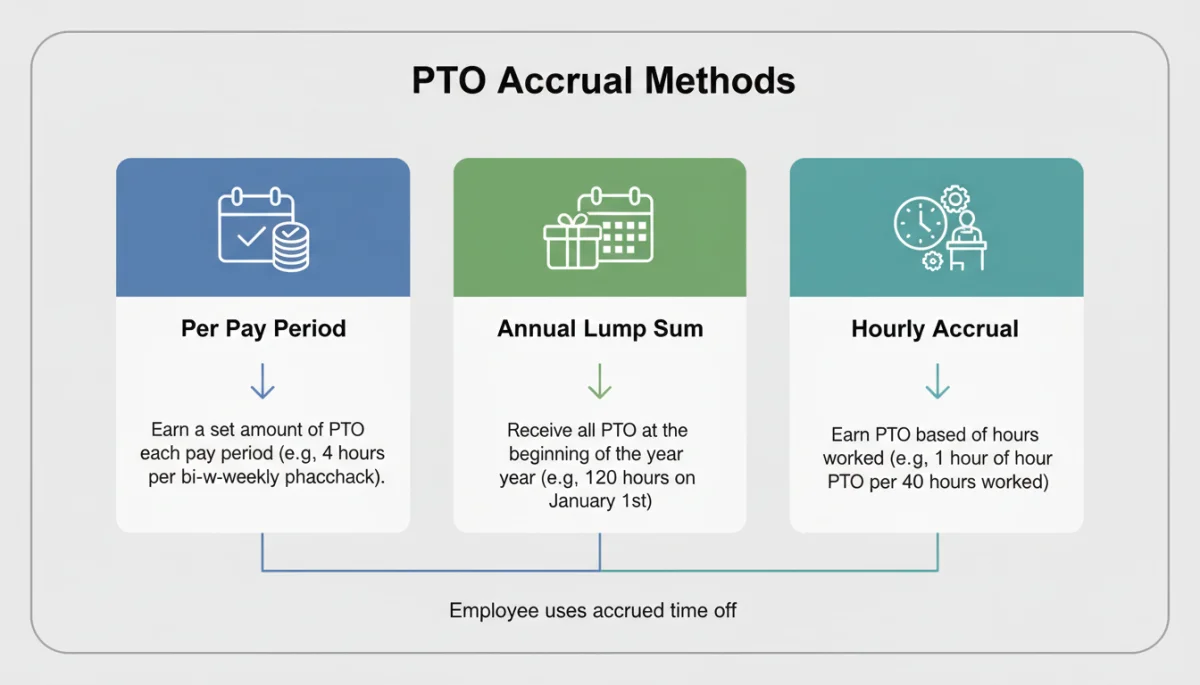
- Per Pay Period Accrual: This is arguably the most common method. Employees earn a small amount of PTO with each paycheck. For example, an employee might accrue 4 hours of PTO for every 80 hours worked. This steady accumulation means PTO builds up gradually, allowing for both short-term absences and longer vacations over time.
- Annual Lump Sum: Some employers grant the entire year’s worth of PTO at the beginning of the year. This method provides immediate access to a large bank of hours, offering significant flexibility for planning extended leaves early on. However, if an employee leaves the company mid-year, they might have to repay any unearned PTO used.
- Hourly Accrual: Similar to per pay period, but more granular. Employees accrue PTO based on the actual hours they work. This method is often favored in industries with variable work schedules, ensuring that part-time or seasonal employees also earn benefits proportionate to their contributions.
- Length of Service Tiers: Many companies implement tiered accrual rates, where the rate at which an employee accrues PTO increases with their tenure. For instance, an employee might accrue 10 days per year for their first three years, then 15 days per year after three years of service. This incentivizes long-term commitment and rewards loyalty.
Each of these methods has distinct advantages and disadvantages for both employers and employees. For instance, per pay period accrual can prevent employees from taking too much time off too early in the year, while a lump sum offers immediate flexibility. Understanding which method your employer uses is paramount to effective PTO management.
In conclusion, grasping the basics of PTO accrual involves recognizing that PTO is a benefit earned over time, not simply given. The specific method of accrual dictates the pace and availability of your leave, making it a critical component of your overall compensation package. Always review your company’s official policy to understand the precise details relevant to your employment.
deciphering your company’s PTO policy
Even with a general understanding of accrual methods, the devil is often in the details of your specific company’s PTO policy. These policies are legally binding documents that outline everything from accrual rates to blackout periods and carryover limits. Taking the time to thoroughly read and comprehend this document is not just advisable; it’s essential for maximizing your leave benefits and avoiding misunderstandings.
Company policies can be complex, often containing jargon or specific clauses that might not be immediately clear. Don’t hesitate to seek clarification from your HR department if any aspect of the policy remains ambiguous. A clear understanding empowers you to plan your time off strategically and ensure you’re utilizing all available benefits.
key elements to look for in your PTO policy
When reviewing your company’s PTO policy, several sections warrant particular attention. These elements directly impact how you accrue, use, and potentially lose your PTO.
- Accrual Rate: This is the most fundamental piece of information, detailing how many hours or days you earn per pay period, month, or year. It’s often expressed as a fraction or a specific number of hours.
- Maximum Accrual (Cap): Many companies impose a cap on the total amount of PTO an employee can accrue. Once this cap is reached, you stop earning new PTO until you use some of your accumulated hours. Understanding your cap is crucial to avoid losing out on earned benefits.
- Carryover Limits: This specifies how much unused PTO, if any, you can roll over from one year to the next. Some companies allow unlimited carryover, while others have strict limits or a “use it or lose it” policy, requiring employees to deplete their PTO balance by a certain date.
- Eligibility Requirements: New employees often have a waiting period before they start accruing or can use PTO. The policy will outline these initial requirements.
- Usage Guidelines: This section typically covers procedures for requesting time off, notice requirements, and any restrictions on when PTO can be taken (e.g., blackout periods during peak business seasons).
- Payout Upon Termination: Policies will detail whether unused PTO is paid out upon an employee’s departure, and under what circumstances. State laws also play a significant role here, as some states mandate PTO payouts, while others do not.
Beyond these specifics, also pay attention to any clauses regarding leave of absence, FMLA (Family and Medical Leave Act) integration, and how holidays are treated. A comprehensive review ensures you’re fully informed about all aspects of your leave entitlements.
In summary, a deep dive into your company’s PTO policy is non-negotiable. It’s the definitive guide to your benefits and understanding it fully is the only way to truly maximize your paid time off. Don’t rely on assumptions; get the facts directly from the source.
maximizing your PTO: strategies for 2026
Once you understand how your PTO accrues, the next step is to develop strategies to maximize its use. This isn’t just about taking vacations; it’s about strategically planning your time off to support your well-being, professional development, and personal life. Maximizing PTO means getting the most value out of every hour you’ve earned.
Effective PTO utilization requires foresight and planning. It involves aligning your personal needs with your company’s policy and operational demands. By being proactive, you can avoid common pitfalls, such as hitting accrual caps or struggling to get approval for desired dates.
smart planning and utilization tips
Here are some practical strategies to help you get the most out of your PTO Accrual 2026:
- Track Your Accrual: Regularly monitor your PTO balance. Most companies provide this information through HR portals or on pay stubs. Knowing your current balance and projected accrual helps you plan effectively and avoid hitting the accrual cap.
- Plan in Advance: Don’t wait until the last minute to request time off. Early planning, especially for popular vacation times, increases the likelihood of approval and allows your team to prepare for your absence.
- Combine with Holidays: Strategically using PTO around national holidays can significantly extend your time off without using many of your accrued hours. For example, taking off the Monday and Tuesday before a Wednesday holiday can give you a five-day break using only two PTO days.
- Avoid the Accrual Cap: If your company has a PTO cap, make sure to use enough hours before you reach it. Otherwise, you’ll stop accruing new PTO, effectively losing out on benefits. Plan a “staycation” or a few long weekends to deplete your balance just enough to continue accruing.
- Understand Blackout Periods: Be aware of any times when PTO is restricted due to business demands. Planning around these periods will increase your chances of approval.
- Take Mental Health Days: Don’t underestimate the power of a single PTO day for mental rejuvenation. Sometimes, a short break is all you need to recharge and return to work refreshed and more productive.
Beyond these tips, consider having open conversations with your manager about your PTO plans. Transparency and collaboration can lead to smoother approvals and better coverage during your absence.
In essence, maximizing your PTO is an active process. It requires understanding your policy, tracking your balance, and strategically planning your leave. By doing so, you ensure that this valuable benefit contributes positively to your overall well-being and professional life.
the impact of company culture on PTO usage
While policies lay the groundwork, company culture often dictates the reality of PTO usage. A written policy might offer generous accrual rates and flexible usage, but if the unwritten rules or managerial attitudes discourage taking time off, employees may feel reluctant to utilize their benefits fully. Understanding and navigating your company’s cultural norms around PTO is as important as understanding the policy itself.
A healthy company culture promotes work-life balance and encourages employees to take their earned time off without guilt or fear of negative repercussions. Conversely, a culture that subtly pressures employees to always be available or to prioritize work over personal time can undermine even the most employee-friendly PTO policies. This cultural aspect is a critical, yet often overlooked, factor in maximizing your leave.
fostering a positive PTO environment
Employees can contribute to and benefit from a culture that supports PTO usage through various actions:
- Lead by Example: If you are in a leadership position, actively take your PTO and encourage your team to do the same. This sets a positive precedent and signals that taking time off is valued.
- Communicate Effectively: When planning your PTO, communicate your intentions and hand-off plans clearly and well in advance. This reduces stress for your colleagues and ensures smooth operations during your absence.
- Respect Colleagues’ PTO: Avoid contacting colleagues who are on PTO for non-urgent matters. This reinforces the idea that time off is sacred and helps them truly disconnect.
- Advocate for Work-Life Balance: Participate in company initiatives or discussions that promote work-life balance. Your input can help shape a more supportive environment for all.
- Observe Unspoken Rules: Pay attention to how PTO is generally perceived and used within your team or department. Are people taking full weeks off, or mostly long weekends? Adjusting your approach to align with successful patterns can increase your comfort and approval rates.
Furthermore, if you notice a consistent pattern of employees struggling to take PTO due to workload or fear, it might be an opportunity to discreetly raise these concerns with HR or management. A company that truly values its employees’ well-being will be receptive to feedback aimed at improving work-life balance.
Ultimately, a supportive company culture transforms PTO from a mere entitlement into a truly beneficial tool for employee health and productivity. By understanding and subtly influencing these cultural dynamics, you can create an environment where maximizing your PTO is not just possible, but encouraged.
legal considerations and state regulations for PTO in 2026
While federal law does not mandate paid time off, many states and some municipalities have enacted their own laws regarding sick leave and, less commonly, general PTO. These regulations can significantly impact how PTO is accrued, used, and, crucially, whether it must be paid out upon termination. Staying informed about these legal nuances is vital for both employers and employees in 2026, especially as the landscape of labor laws continues to evolve.
For employees, understanding these legal protections can empower them to ensure their rights are upheld. For instance, if a state mandates sick leave accrual, an employer cannot simply deny it or force employees to use other PTO categories for illness. These laws provide a baseline of benefits that employers must meet or exceed, regardless of their internal policies.
key legal aspects affecting PTO
Several legal considerations can influence your PTO Accrual 2026:
- State and Local Sick Leave Laws: A growing number of states and cities require employers to provide paid sick leave. These laws often dictate accrual rates, permissible uses of sick leave, and whether unused sick leave can carry over or be paid out. Employees should know if their location has such mandates.
- PTO Payout Laws: The question of whether unused PTO must be paid out when an employee leaves a company varies widely by state. Some states consider accrued PTO as earned wages that must be paid, while others allow employers to set their own policies. It’s crucial to know your state’s stance on this issue.
- “Use It or Lose It” Policies: The legality of “use it or lose it” PTO policies also depends on state law. While some states permit them, others (like California) prohibit them, viewing accrued PTO as a vested benefit that cannot be forfeited.
- FMLA and Other Leave Laws: The Family and Medical Leave Act (FMLA) provides job-protected leave for certain family and medical reasons. While FMLA leave is unpaid, employees can often use their accrued PTO concurrently with FMLA leave to maintain income during their absence. Understanding how your company’s PTO policy integrates with FMLA is important for extended leaves.
The legal landscape surrounding PTO is dynamic. What was true last year might have changed in 2026, with new legislative efforts often emerging at state and local levels. Regularly checking official government labor department websites or consulting with HR professionals can help you stay current with any changes that might affect your entitlements.
In conclusion, while an employer’s policy is primary, state and local laws provide a crucial framework of minimum requirements and employee protections. Being aware of these legal considerations ensures that your PTO benefits are not only maximized but also legally compliant.
forecasting PTO for major life events
Life is unpredictable, and major events often require extended time away from work. Whether it’s a wedding, a new baby, a significant medical procedure, or caring for an ailing family member, these moments underscore the immense value of accrued PTO. Strategic forecasting and planning for such events ensure you can navigate them without unnecessary financial strain or professional stress.
Planning for major life events goes beyond simply having enough days. It involves understanding how various leave types (PTO, FMLA, short-term disability) might intersect, the implications for your income, and how to best communicate your needs to your employer. This proactive approach allows you to fully engage with these significant personal milestones.
strategies for long-term PTO planning
Consider these strategies when planning your PTO for significant life events:
- Assess Your Needs: For planned events like weddings or elective surgeries, estimate the amount of time you’ll realistically need off. For less predictable events, consider building a buffer in your PTO balance if possible.
- Understand Overlap with Other Leave Types: For events like childbirth or serious illness, your PTO might run concurrently with FMLA or short-term disability benefits. Understand how these leaves interact and which benefits pay first or supplement others.
- Communicate Early and Often: For planned events, give your employer as much advance notice as possible. This allows for proper coverage planning and increases the likelihood of your request being approved. For unexpected events, communicate as soon as feasible.
- Save Strategically: If your PTO has a carryover limit, consider saving a substantial portion of your allowed carryover for potential future needs, rather than using it all up at the end of the year.
- Review Your Cap: If you anticipate needing a large block of time off, be mindful of your PTO accrual cap. You don’t want to hit the cap and stop accruing just when you need to save the most.
- Financial Planning: Understand the financial implications of taking extended leave. If PTO doesn’t cover your entire absence, explore options like short-term disability or unpaid leave, and plan your finances accordingly.
Furthermore, when planning for family-related leaves, be aware of any state-specific paid family leave laws that might offer additional financial support beyond your company’s PTO. These benefits can significantly ease the burden during critical times.
In conclusion, forecasting PTO for major life events is a testament to responsible personal and professional planning. By understanding your accrual, policy, and other available benefits, you can ensure that life’s most significant moments are met with peace of mind, not stress over time off.
the future of PTO: trends for 2026 and beyond
The landscape of employee benefits, particularly PTO, is continuously evolving. In 2026, we are seeing a continuation of trends that prioritize flexibility, employee well-being, and a more holistic approach to time off. Companies are increasingly recognizing that generous and well-structured PTO policies are not just a perk but a strategic investment in employee retention, productivity, and overall organizational health.
Future trends suggest a move away from rigid, siloed leave categories towards more integrated and flexible systems. The focus is shifting from simply providing days off to empowering employees with the autonomy to manage their work-life balance effectively, recognizing that personal circumstances and needs vary greatly.
emerging PTO models and considerations
Several key trends are shaping the future of PTO:
- Unlimited PTO: While not universally adopted, the concept of unlimited PTO continues to gain traction, particularly in tech and professional services. This model removes traditional accrual and caps, trusting employees to manage their time responsibly. While appealing, it often requires a strong company culture of trust and clear communication to be effective.
- Mandatory Minimum PTO: In response to concerns that unlimited PTO can sometimes lead to employees taking less time off, some companies are exploring mandatory minimums within an unlimited framework, ensuring employees truly disconnect.
- Paid Sabbaticals: Longer-term employees are increasingly being offered paid sabbaticals, typically after a certain number of years of service. These extended breaks are designed for rejuvenation, personal development, or even community service, offering a significant boost to employee loyalty and preventing burnout.
- Enhanced Family Leave: Beyond FMLA, many companies are offering more robust paid parental leave (for all genders) and extended leave for caring for sick family members, recognizing the critical role employees play in their families’ well-being.
- Mental Health Days: The explicit inclusion of mental health days within PTO policies, or as a separate category, is becoming more common. This reflects a growing awareness of the importance of mental well-being and destigmatizes taking time off for mental health reasons.
- Global Harmonization: For multinational corporations, there’s a growing effort to harmonize PTO policies across different regions, balancing local legal requirements with a consistent global employee experience.
These trends indicate a broader shift towards viewing PTO not as an expense, but as an integral part of a comprehensive well-being strategy. As companies compete for talent, innovative and supportive PTO policies will become even more significant differentiators.
In conclusion, the future of PTO in 2026 and beyond points towards greater flexibility, increased focus on employee well-being, and a more strategic approach to time off. Staying abreast of these developments will help employees and employers alike adapt to a changing work environment and continue to maximize the benefits of paid leave.
| Key Aspect | Brief Description |
|---|---|
| Accrual Methods | How PTO is earned: per pay period, annual lump sum, or hourly. Critical for planning. |
| Policy Details | Understand caps, carryover limits, and payout rules to avoid losing benefits. |
| Maximization Strategies | Plan ahead, combine with holidays, and track balance to optimize usage and well-being. |
| Legal Landscape | Be aware of state and local laws governing sick leave and PTO payouts. |
frequently asked questions about PTO accrual
PTO accrual is the process by which employees earn paid time off over a period, rather than receiving a lump sum. It typically involves earning a certain number of hours or days per pay period, month, or year, gradually building up a bank of available leave for vacation, sick days, or personal time.
Your company’s PTO accrual rate is usually detailed in your employee handbook, benefits guide, or HR portal. You can also ask your HR department or manager for clarification. It’s crucial to understand this rate to effectively plan your time off.
A PTO cap is the maximum number of paid time off hours or days an employee can accumulate. Once you reach this cap, you stop accruing new PTO until you use some of your existing balance. Understanding your cap helps prevent you from losing out on earned benefits.
Whether unused PTO can be carried over depends on your company’s policy and state laws. Some companies allow full carryover, others have strict limits, and some operate on a “use it or lose it” basis. Always check your specific policy for details.
The payout of unused PTO upon termination varies by state law and company policy. Some states mandate that accrued PTO be paid out as earned wages, while others leave it to the employer’s discretion. Consult your state’s labor laws and your company’s policy.
conclusion
Navigating the nuances of PTO Accrual 2026 is an essential skill for every employee aiming for optimal work-life balance and effective benefit utilization. By thoroughly understanding your company’s accrual methods, delving into the specifics of your PTO policy, and adopting smart planning strategies, you can maximize your earned leave. Furthermore, recognizing the impact of company culture and staying informed about relevant legal considerations will empower you to make the most of your time off, ensuring it contributes positively to both your personal well-being and professional productivity. As PTO policies continue to evolve, proactive engagement remains key to unlocking the full value of this crucial employee benefit.
